‘Kara’ shows next step in performance-capture technology
Published: Tue, 03/13/12
 | |
| Presence News from ISPR | |
| ‘Kara’ shows next step in performance-capture technology | |
| March 13, 2012 [From Boston.com; much more information is available in an article in Eurgamer]
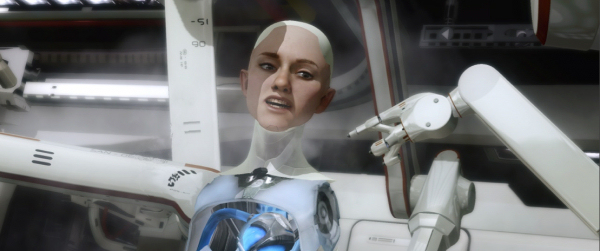
‘Heavy Rain’ game creator debuts high-tech ‘Kara’ March 08, 2012|Derrik J. Lang, AP Entertainment Writer The future of performance-capture technology is right around the corner, and its name just might be “Kara.’’ David Cage of video game developer Quantic Dream unveiled a new way to simultaneously capture and digitize an actor’s performance — including voice, face and body — during a presentation Wednesday at the Game Developers Conference in San Francisco. The innovation came in the form of a 7-minute non-interactive demonstration titled “Kara.’’ In the footage, which Cage said could be entirely run on a PlayStation 3, actress Valorie Curry portrays an android named Kara who gains self-awareness as she’s being assembled by a squad of robotic arms. The virtual Kara emotively speaks in English, French and German, as well as sings in Japanese, as she converses with an operator who is heard but never seen. “I think the most interesting future feature in the next-gen platforms should be meaningful content,’’ said Cage. “Yes, technology is great and is going to be better and better, and we’ll have more power until you won’t be able to tell the difference between reality and virtual, but what are you going to use this technology for and what do you have to say?’’ Cage, who wrote and directed the 2010 thriller game “Heavy Rain,’’ noted that “Kara’’ is a demo, not Quantic Dream’s next project. He said the new technology from the French studio could be used for full performance capture, a technique where all aspects of a portrayal are recorded at once, rather than the common practice of separately capturing them. Unlike the methods used to capture actors’ performances in “Avatar,’’ Cage said the performance capture technology developed by Quantic Dream used about 90 sensors placed on an actor’s face instead of a small camera mounted in front of the actor’s noggin. It’s also faster, less expensive and requires quiet because the audio and movement are captured together. –– Online: –– Follow AP Entertainment Writer Derrik J. Lang on Twitter at http://www.twitter.com/derrikjlang/. | |
| Read ISPR Presence News Online |
|
The International Society for Presence Research (ISPR) is a not-for-profit organization that supports academic research related to the concept of (tele)presence. ISPR Preseence News is available via RSS feed, various e-mail formats and/or Twitter. For more information please visit us at http://ispr.info |